
New customs inspection regulations in the United States involve full container loads, and the inspection time may double!
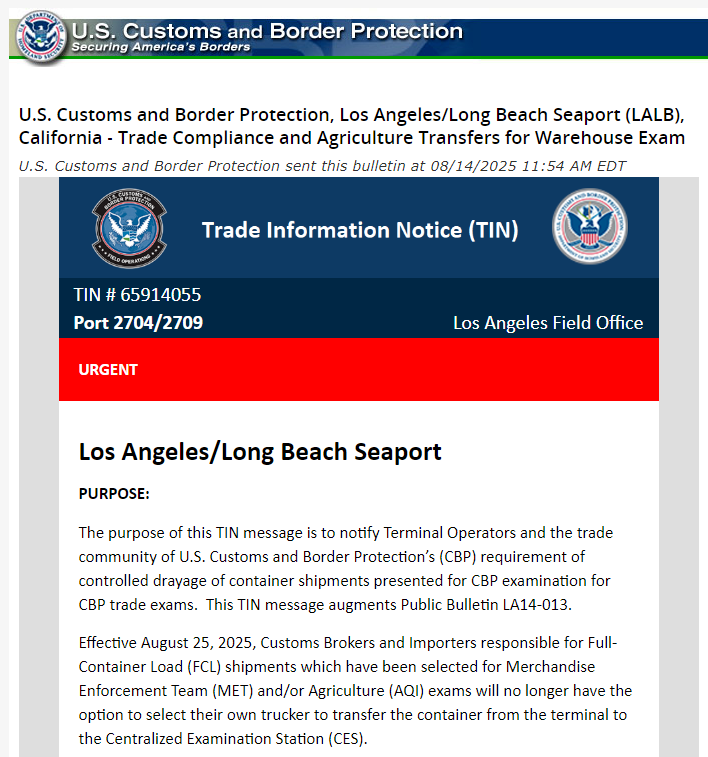
The U.S. Customs and Customs (CBP) has issued a new policy, which will implement brand-new full container cargo inspection and transportation rules at the Port of Los Angeles/Long Beach starting from August 25, 2025! This will have a direct impact on the timeliness, cost and control ability of our e-commerce logistics. To put it simply, once your entire container is selected for inspection by customs, you can no longer choose your own service provider for trailer transportation. It must be taken over throughout the process by the customs-designated inspection yard (CES) fleet!
1. Core Contents of the New Regulations:
1? ? whose goods will be affected?
? full container declaration of e-commerce goods (even if there are multiple items and SKUs in one container and goods from multiple sellers are consolidated in China, as long as they are cleared with one importer 's tax number /Bond, they are considered full containers).
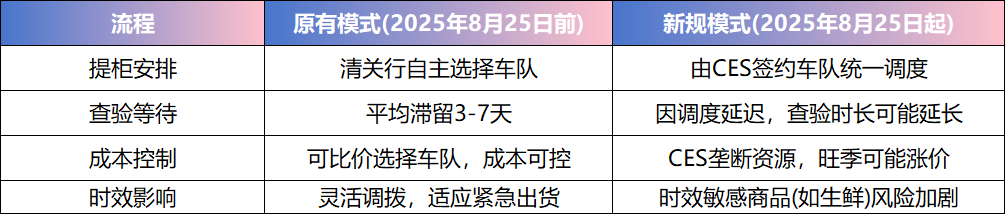
? If selected by the customs commodity enforcement Inspection (MET) or agricultural Quality inspection (AQI), the trailer must be operated by the CS-designated fleet. The customs clearance agency/freight forwarder cannot arrange a cheaper or familiar fleet on its own.
2? ? whose goods are temporarily safe?
? True "LCL (less than Container Load) shipments (multiple consignors and consents in one container, multiple bonds for customs clearance) can still choose their own fleet.
?? Note: Many "consolidated shipments" operated within cross-border e-commerce are still regarded as "full containers" by the US customs! Once inspected, it is still subject to the new regulations
3? ? is not at one 's discretion
If the entire container is required to be returned, it must also be handled by the CES fleet. Customers are not allowed to make their own arrangements.
2.Why was this policy introduced?
Recently, CBP has discovered multiple incidents of evading inspection - some enterprises have taken advantage of their independent transportation authority to change labels, open containers to hide sensitive goods (such as infringing products, uncertified electronic devices, and prohibited agricultural products) during the transfer process, and even forge delivery records, seriously disrupting the order. As a result, the customs has tightened its control to eliminate any loopholes.
3. What does the customs mainly check?
?MET (commodity enforcement inspection) : focus
? electronic products (such as those without FCC certification and falsely labeled battery power)
? children 's products (lacking ASTM test reports and having unsafe structures)
? infringing products (counterfeit brands, fake goods, pirated products)
? underreporting of goods value (the declared amount does not match the actual amount)
?AQI (agricultural quality inspection) : focus
? wooden packaging (for pests/mold)
? seeds, plants, and live products
? meat and dairy products (unsterilized)
? goods containing soil or organic residues
4. Actual Impact on E-commerce Sellers:
? Inspection time has been significantly extended: the resources of the designated fleet for CES are limited. During peak season, there may be "queuing for container pick-up". Previously, it took an average of 3 to 7 days, but it may double in the future!
? Risk of out-of-control logistics timeliness: It is very unfriendly to seasonal products, best-selling restocking, and goods with high timeliness requirements (such as Christmas stockups)!
? Costs may rise: CES designated fleets lack price comparison space, towing fees may increase, and overall customs clearance costs are expected to rise.
? Return shipping operation is more complicated: in case of return shipping, control and flexibility decrease.
5.Response Suggestions: Prepare early and Optimize early!
1? ? strictly compliant declaration: Eliminate "false reporting/omission/underreporting", and pay special attention to complete certification for categories such as agricultural products, electronic products, and children's toys;
2? ? optimize the inventory preparation plan: considering the delay in inspection, it is recommended to prepare the goods for export 20 to 30 days in advance during the peak season to avoid stockout.
3? preferred logistics partner: deeply cooperate with experienced freight forwarders/customs clearance agencies capable of handling customs assistance checks;
4? ? consider separate shipments: if feasible, switch to the less-than-container load (LCL) mode with truly multiple sender and consignee information to retain transportation flexibility;
5? make a cost budget: set aside additional storage, trucking and warehousing costs that may arise from inspection.
? Policy effective date: August 25, 2025 ? Applicable ports: Los Angeles/Long Beach Port (LA/LB) ? Applicable business: full container e-commerce cargo customs clearance
Cross-border e-commerce is entering an era where "compliance is king". Only by standardizing declaration, making early plans and strengthening supply chain coordination can we go global steadily and achieve stable growth under the new regulations!
Address:22nd Floor, Block A, Liandu Building Futian Street, Yiwu City, Zhejiang Province
Telephone:0579-85391393
Cell phone:13216796913
;)